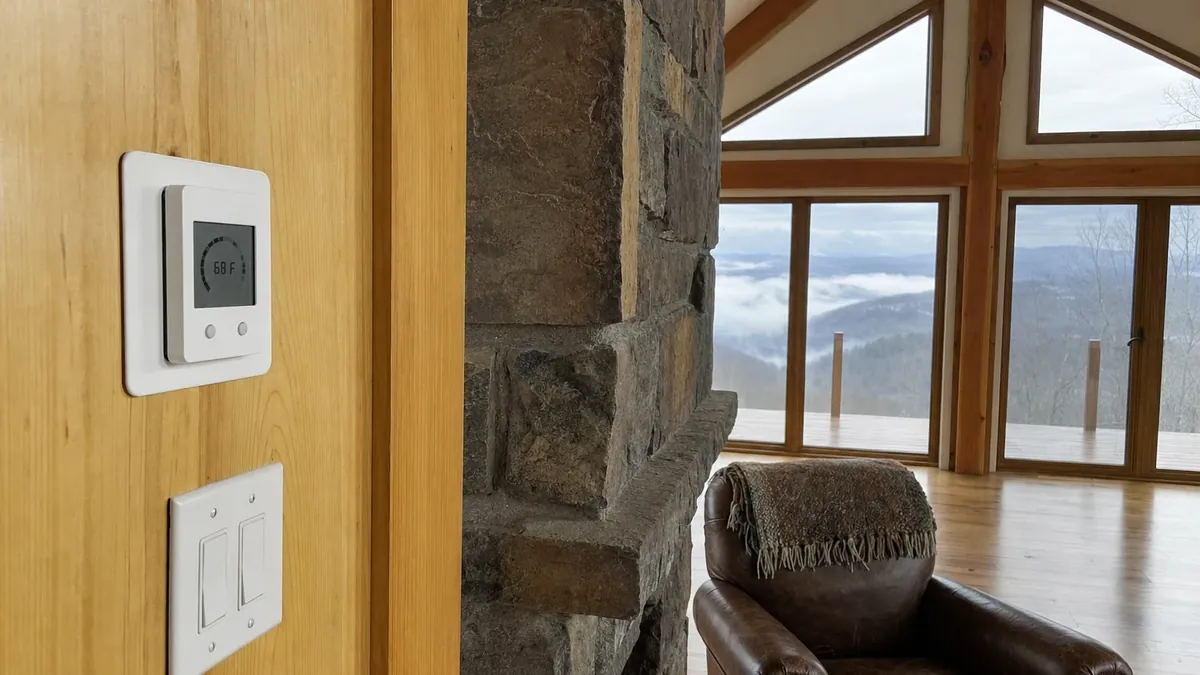
A time-of-use electricity rate charges more during defined peak windows and less off-peak. A heat pump can exploit this by pre-heating the house one to three degrees before a peak window and coasting through it. The saving depends entirely on thermal mass: a slab or masonry house coasts for hours, a leaky pier-foundation cabin does not.
How a time-of-use rate works
A TOU tariff charges different amounts per kilowatt-hour depending on when you consume. Peak periods — typically defined winter morning and evening windows — cost more; off-peak hours cost less, often materially less than the standard flat rate.
The structure exists because generation and transmission capacity are most strained during those windows. Shifting consumption away from them benefits the cooperative, and the rate design passes some of that benefit to you.
Pre-heating: using the building as a battery
The strategy that makes TOU work for a heat pump is pre-heating. The house is a thermal store, so you charge it when electricity is cheap and coast through the expensive window.
- In the hours before the morning peak, the thermostat raises setpoint slightly — commonly one to three degrees.
- The structure, furnishings and any slab absorb that heat.
- When the peak window opens, setpoint drops back and the heat pump runs little or not at all.
- The house drifts down slowly through the window rather than calling for heat during it.
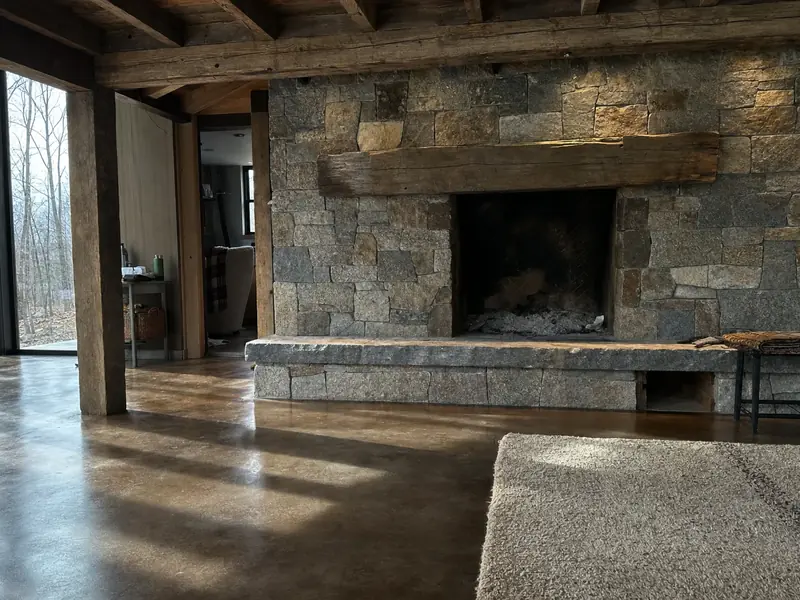
The technique works in proportion to the building's thermal mass and envelope quality. A well-insulated house with a slab or substantial masonry coasts for hours. A leaky, timber-framed cabin on piers with single-pane glass sheds the stored heat almost immediately, and pre-heating simply moves consumption without saving anything.
What the thermostat needs to do
- Multiple daily setpoint changes with fine time resolution — not a simple day/night pair.
- Correct heat pump support, including proper handling of supplemental heat. A thermostat that engages strip heat to recover from a setback destroys the entire saving. See strip heat control.
- Adaptive or intelligent recovery, so it begins the pre-heat early enough to reach setpoint on the compressor alone.
- Compatibility with your specific inverter system's communicating protocol. Many high-end inverter systems require the manufacturer's own controller, and a generic smart thermostat will disable modulation — converting a variable-speed system into an expensive single-stage one.
Want this run against your own delivery ticket and EMC bill? It takes one call. Free, no obligation.
Call (470) 208-3151When TOU is the wrong choice
Be honest about the cases where this does not pay:
- Poor envelope. No usable thermal storage means no coasting, and you pay peak rates anyway.
- Occupancy through peak windows. A retired household or a home office needs comfort in exactly the hours the tariff penalises.
- Short-term rentals. Guests set the thermostat to whatever they want whenever they want. TOU and guest control are fundamentally incompatible.
- Small differential. If the peak-to-off-peak spread is narrow, the behavioural cost exceeds the saving.
- Demand charges. Some TOU structures include a demand component that penalises the highest instantaneous draw. Pre-heating can increase that. Read the tariff.
For most Pickens County households converting from propane, the saving from leaving propane dwarfs the saving from optimising the rate. Complete the conversion, run a full heating season on a standard rate, then look at TOU with a year of real data. Do not compound two variables at once.
Run your own numbers
Delivered-BTU math, not a marketing estimate. Change any input and the result updates.
Example only: a house burning 850 gallons at $3.20/gal through an 80% furnace, against electricity at $0.13/kWh. Backup strip heat in a hard cold snap is not modeled. Enter your own numbers above.
- Delivered heat needed
- 62.2 million BTU
- Propane cost per delivered MMBTU
- $43.71
- Heat pump cost per delivered MMBTU
- $15.29
- Electricity used
- 7,320 kWh
- This winter on propane
- $2,720
- This winter on a heat pump
- $952
Worked example at typical North Georgia prices. Change any input above and this recalculates for your house. Estimate only, not a guarantee.
Free and no obligation. You are connected to one independent, licensed, insured Georgia contractor serving your area — never a call center, never a list.
Common questions about time-of-use rates & pre-heating
Should I switch to a time-of-use rate when I convert?
Will pre-heating make the house uncomfortable?
Does my cabin's thermal mass matter that much?
Where these numbers come from
- Amicalola EMC — current residential rates, RESP terms and program availability
Every contractor in this network holds a current Georgia Conditioned Air or Electrical Contractor license. You can confirm any license yourself before you sign anything — Georgia Secretary of State license lookup.
Get a conversion figure for your address
Ask us which controller your system actually requires before you buy a thermostat. It is the cheapest mistake to avoid.
Free and no obligation. You are connected to one independent, licensed, insured Georgia contractor serving your area — never a call center, never a list.
More in Electrical Infrastructure & Backup Power
Service capacity, strip-heat circuits, generator compatibility, and surge survival on rural EMC lines.
Cluster hub200A service & load calculation →