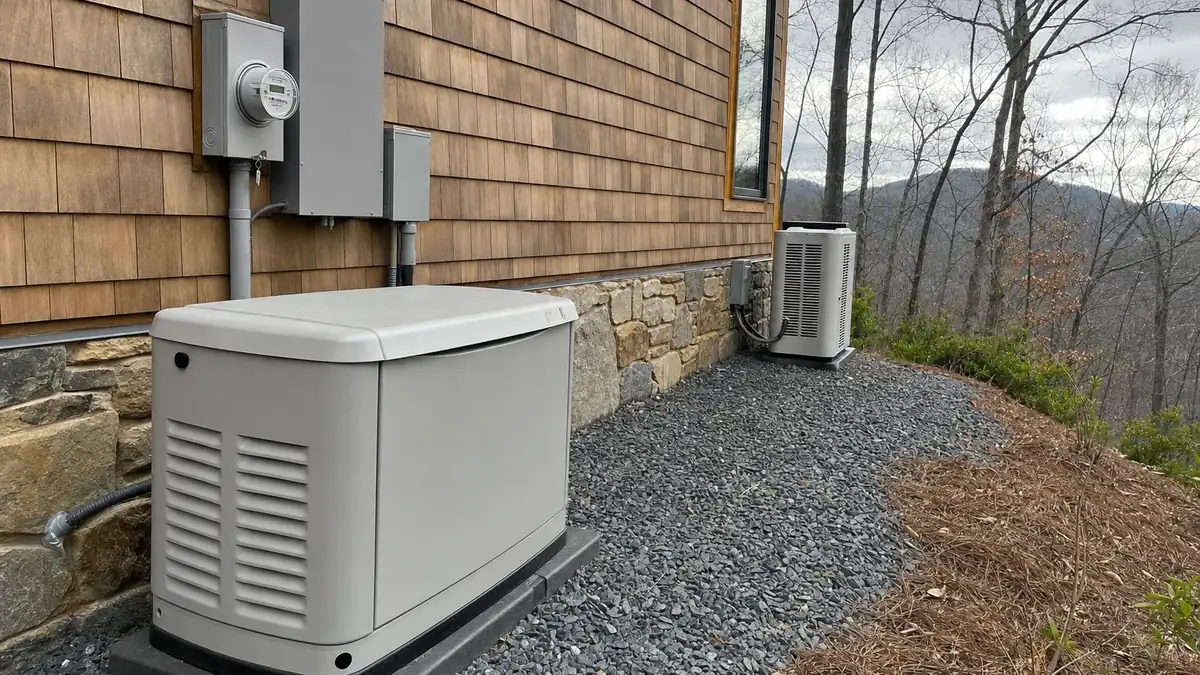
An inverter heat pump ramps its compressor from zero under electronic control, so starting current is a small multiple of running current rather than the large surge a single-stage unit produces. That usually allows a smaller standby generator. On a well property the well pump is often the larger starting load and drives the sizing.
Starting current, and why it dominates generator sizing
Generators are usually sized by running watts, but what actually defeats them is the momentary surge when a motor starts.
A conventional single-stage compressor starts across the line at full voltage. Its locked rotor amperage can reach several times its running current for a fraction of a second, and the generator has to absorb that without collapsing voltage. This is why traditional sizing guidance for air conditioners and heat pumps is so conservative — the generator is being sized for an instant, not for the load.
An inverter-driven compressor does not start that way. It ramps from zero under electronic control, so starting current is a small multiple of running current rather than a large one. In practical terms this is the single biggest advantage inverter equipment has in a backup-power context, and it frequently allows a smaller and cheaper generator than a like-for-like single-stage system would demand.
What actually has to run during an outage
The instinct is to back up the whole house. The cheaper and more reliable approach is to decide what genuinely must run, especially on a rural property with a well.
- Heat pump compressor and air handler
- The point of the exercise.
- Well pump
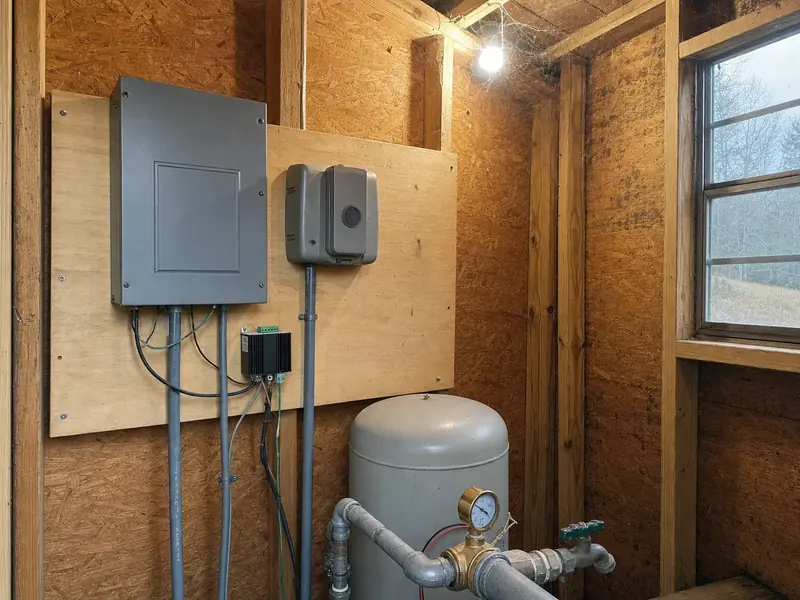
- On a well property, no power means no water. This is frequently a larger starting load than the heat pump and is the item most often forgotten in sizing.
- Refrigeration
- Low running load, negligible surge.
- Septic pump, if you have one
- Intermittent but non-optional.
- Strip heat
- Almost always excluded from generator backup. A 15 kW bank would dominate the entire generator. This is another argument for a low balance point — see strip heat circuits.
- Range, dryer, EV charger
- Exclude, or place under automatic load management.
Want this run against your own delivery ticket and EMC bill? It takes one call. Free, no obligation.
Call (470) 208-3151Three ways to buy a smaller generator
- Soft starters. A listed soft-start device on any remaining across-the-line motor — commonly the well pump — reduces its inrush substantially and can drop the required generator a full size. Cheap relative to the generator it avoids.
- Load management modules. Automatic load shedding sheds large intermittent loads when the generator approaches capacity, so you size for realistic simultaneous demand rather than theoretical worst case.
- A managed critical-loads subpanel. Move only what must run onto a dedicated subpanel fed by the transfer switch. Simple, robust, and the easiest configuration to reason about during an actual outage.
Fuel: the decision that interacts with your conversion
This is where the two projects intersect, and where sequencing matters.
If your property has no natural gas — which is most of this county — a standby generator runs on propane or diesel. Choosing propane means keeping a tank, which changes your gas line decommissioning plan and your tank decision entirely.
That is not necessarily a bad outcome. A generator consumes propane only during outages, so annual consumption is a tiny fraction of what heating used. A small owned tank dedicated to the generator is often more economical than a large leased heating tank, and it preserves genuine fuel diversity on a remote property.
Run your own numbers
Delivered-BTU math, not a marketing estimate. Change any input and the result updates.
Example only: a house burning 850 gallons at $3.20/gal through an 80% furnace, against electricity at $0.13/kWh. Backup strip heat in a hard cold snap is not modeled. Enter your own numbers above.
- Delivered heat needed
- 62.2 million BTU
- Propane cost per delivered MMBTU
- $43.71
- Heat pump cost per delivered MMBTU
- $15.29
- Electricity used
- 7,320 kWh
- This winter on propane
- $2,720
- This winter on a heat pump
- $952
Worked example at typical North Georgia prices. Change any input above and this recalculates for your house. Estimate only, not a guarantee.
Free and no obligation. You are connected to one independent, licensed, insured Georgia contractor serving your area — never a call center, never a list.
Common questions about generator sizing for heat pumps
Can a portable generator run a heat pump?
What size generator do I need?
Will the generator run the emergency heat strips?
Where these numbers come from
- NFPA 70, National Electrical Code — service capacity, load calculation and surge protection requirements
- AHRI Directory of Certified Product Performance — verify any quoted HSPF2, SEER2 and capacity rating
Every contractor in this network holds a current Georgia Conditioned Air or Electrical Contractor license. You can confirm any license yourself before you sign anything — Georgia Secretary of State license lookup.
Get a conversion figure for your address
If backup power is your real objection to going electric, say so up front. We will design around it rather than talk you out of it.
Free and no obligation. You are connected to one independent, licensed, insured Georgia contractor serving your area — never a call center, never a list.
More in Electrical Infrastructure & Backup Power
Service capacity, strip-heat circuits, generator compatibility, and surge survival on rural EMC lines.
Cluster hub200A service & load calculation →