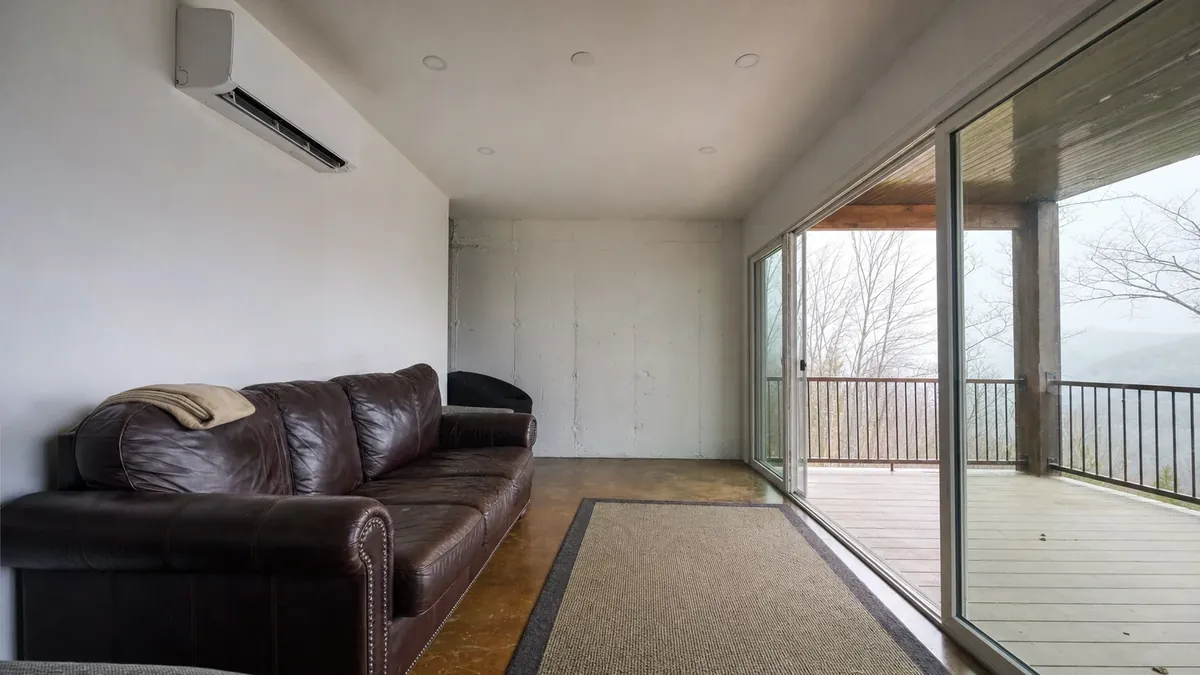
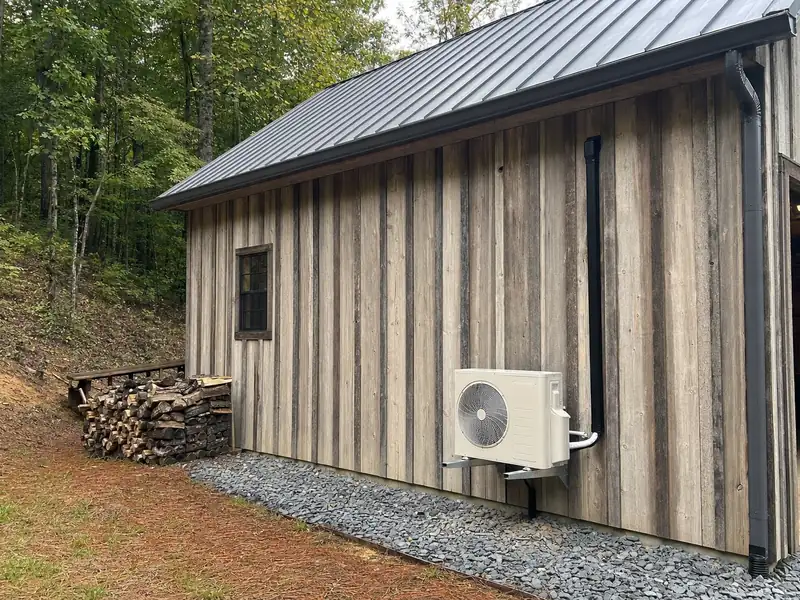
A ductless mini-split conditions a walk-out terrace level, detached workshop or bonus room without extending the existing duct system, which cannot add airflow it was never sized for. A single-zone install runs about $4,800-6,500 and needs one three-inch wall penetration. Below-grade rooms usually require a condensate pump because gravity drainage is unavailable.
Why adding a duct run usually makes things worse
The instinct is to run more duct. The problem is that a duct system is a fixed-capacity air distribution network. Adding a branch does not add air — it redistributes what the blower already moves, so the new room gets some and every existing room gets slightly less.
Long runs to a terrace level or over a garage also lose temperature to the unconditioned space they pass through, and static pressure climbs, which reduces total airflow and stresses the blower.
A ductless zone sidesteps all of it: dedicated compressor, dedicated capacity, dedicated thermostat, no impact on the rest of the house.
The four applications we see most in Pickens County
- Walk-out terrace levels
- Below-grade on three sides, exposed on one. Heavy thermal mass, high humidity, and a load profile that has almost nothing in common with the level above it. Frequently in use as an in-law suite or guest quarters.
- Bonus rooms over garages
- Surrounded by unconditioned space on five of six surfaces, including a floor sitting above an uninsulated garage. The single worst-performing room in most mountain house plans.
- Detached workshops and barns
- No duct path exists and never will. A single-zone unit conditions the space seasonally at a fraction of the cost of extending anything.
- Sunrooms and enclosed porches
- Glass-dominated envelope with a load that swings enormously between a sunny afternoon and a still night. Needs its own modulating capacity, not a share of the house's.
Sizing, placement and the mistakes that cost comfort
- Oversizing is the default error. An oversized head short-cycles, never reaches steady state and does not dehumidify. In a damp terrace level that is the failure mode you least want.
- Mount high on an interior-facing wall where possible. Exterior walls complicate the line-set penetration and place the unit in the coldest part of the room.
- Plan the condensate route before drilling anything. Below-grade rooms rarely offer gravity drainage, so a condensate pump is commonly required — and it needs power and service access.
- Multi-zone is not automatically better. Multi-zone systems modulate as one and can behave poorly when only one head calls. Two single-zone systems often outperform one two-zone system.
- Check the low-ambient heating rating. A unit rated to cool beautifully may have a poor heating envelope at Pickens design temperature. This is heating equipment first.
Want this run against your own delivery ticket and EMC bill? It takes one call. Free, no obligation.
Call (470) 208-3151The short-term-rental case
In the cabin belt around Jasper, Talking Rock and the resort communities, per-room zoning is a revenue argument rather than a comfort one. Booked rooms get conditioned and empty ones do not, and a loft or bunk room that was previously unusable in January becomes lettable.
There is also a risk argument: an absentee-owned cabin with a single central system has a single point of failure, and a frozen supply line during a booked weekend is a five-figure event. A ductless zone with remote monitoring is cheap insurance against it.
Run your own numbers
Delivered-BTU math, not a marketing estimate. Change any input and the result updates.
Example only: a house burning 850 gallons at $3.20/gal through an 80% furnace, against electricity at $0.13/kWh. Backup strip heat in a hard cold snap is not modeled. Enter your own numbers above.
- Delivered heat needed
- 62.2 million BTU
- Propane cost per delivered MMBTU
- $43.71
- Heat pump cost per delivered MMBTU
- $15.29
- Electricity used
- 7,320 kWh
- This winter on propane
- $2,720
- This winter on a heat pump
- $952
Worked example at typical North Georgia prices. Change any input above and this recalculates for your house. Estimate only, not a guarantee.
Free and no obligation. You are connected to one independent, licensed, insured Georgia contractor serving your area — never a call center, never a list.
Common questions about mini-splits for basements & shops
Will one mini-split heat my whole basement?
Do mini-splits heat, or only cool?
How disruptive is the installation?
Where these numbers come from
- NEEP Cold Climate Air Source Heat Pump Product List — capacity actually retained at 5°F, by model
- AHRI Directory of Certified Product Performance — verify any quoted HSPF2, SEER2 and capacity rating
- ENERGY STAR air source heat pump criteria — current federal efficiency thresholds
Every contractor in this network holds a current Georgia Conditioned Air or Electrical Contractor license. You can confirm any license yourself before you sign anything — Georgia Secretary of State license lookup.
Get a conversion figure for your address
Tell us which room is cold and what is above, below and beside it. That is most of the sizing conversation.
Free and no obligation. You are connected to one independent, licensed, insured Georgia contractor serving your area — never a call center, never a list.
More in Equipment & Mountain Engineering
Capacity retention at design temp, hybrid architectures, and load sizing for homes above 1,800 feet.
Cluster hubCold-climate inverter heat pumps →