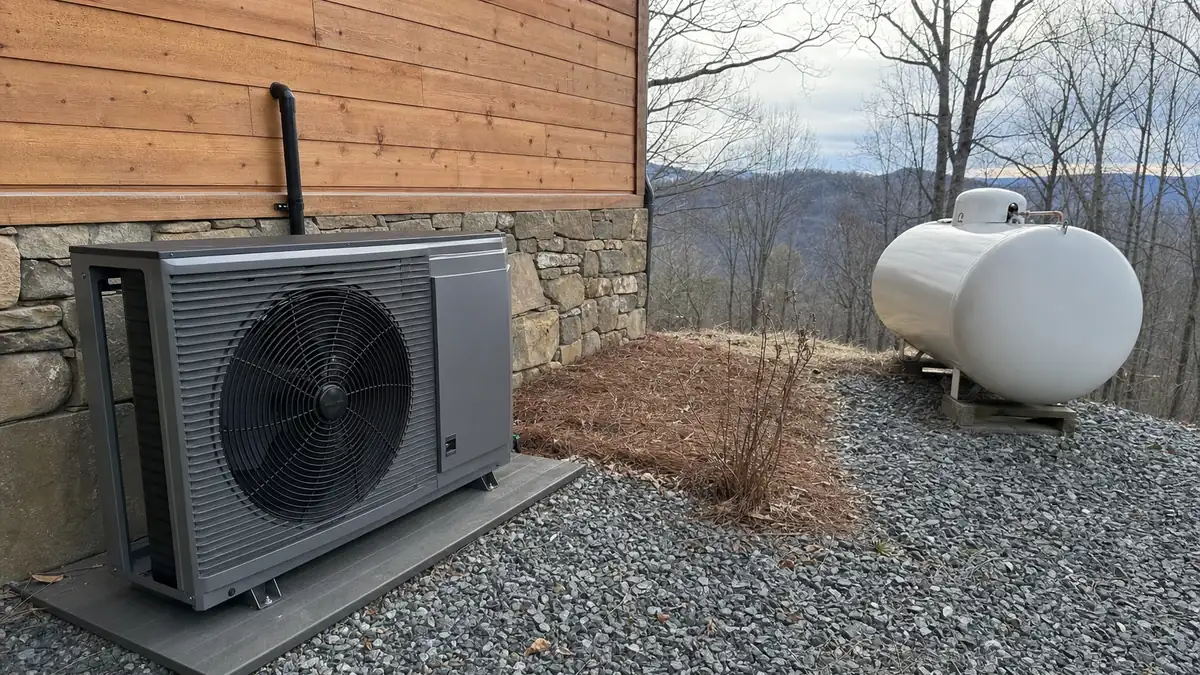
A dual-fuel system pairs a heat pump with the existing propane furnace on one duct system. The heat pump carries roughly 85-90% of the season's runtime hours; below a set switchover temperature the furnace takes over. Propane consumption typically falls 80-90%, no electric strip heat is needed, and an electrical service upgrade is often avoided entirely.
How the handoff works
In a dual-fuel system the heat pump and the propane furnace share one duct system and one thermostat, and they never run together. A control strategy decides which one is operating:
- Above the switchover temperature, the heat pump runs alone. This covers the large majority of the heating season.
- Below it, the heat pump locks out and the propane furnace takes the house.
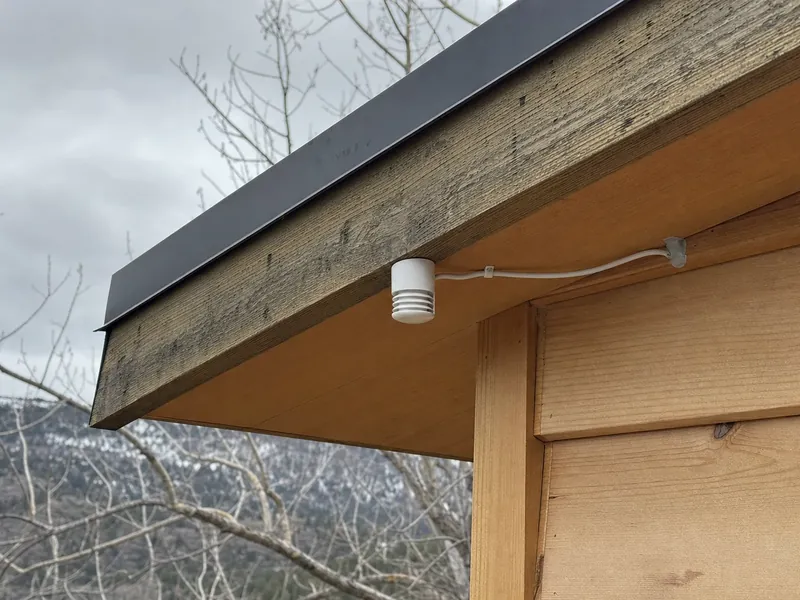
- The changeover is automatic, based on outdoor temperature from a sensor or the thermostat's own outdoor input.
Crucially, the electric strip heaters that a straight heat pump conversion relies on for backup are not needed. The propane furnace is the backup stage — which frequently means no electrical service upgrade is required, and that removes the single largest cost item from many conversion quotes.
Setting switchover: thermal vs. economic balance point
There are two defensible ways to set the switchover temperature, and they give different answers.
- Thermal balance point
- The temperature at which the heat pump can no longer meet the load. Switching here maximises heat pump runtime and minimises gallons burned.
- Economic balance point
- The temperature at which propane becomes cheaper per delivered BTU than the heat pump's degraded cold-weather performance. Switching here minimises total cost.
Which is correct depends entirely on your propane price and your electric rate, so it is not a factory setting — it is a calculation, and it should be revisited when propane prices move significantly. It should be set at commissioning, and you should be told where it is and how to change it.
Want this run against your own delivery ticket and EMC bill? It takes one call. Free, no obligation.
Call (470) 208-3151Where dual-fuel is the better answer than full conversion
- Your propane furnace is relatively new. Scrapping a working eight-year-old furnace to avoid propane is poor economics.
- Your electrical service is at capacity. Dual-fuel avoids strip-heat circuits, which frequently avoids a service upgrade entirely.
- You have pre-bought gallons. You draw them down as backup instead of stranding them.
- The house is at extreme elevation or exposure. On the Burnt Mountain shoulder, a guaranteed combustion backup stage has value beyond arithmetic.
- You want to de-risk the decision. Dual-fuel is reversible in a way that removing the tank is not.
The trade-offs, stated honestly
You keep the tank, which means you keep the lease or the ownership, the minimum-fill logistics, and the annual system leak check. You still have a combustion appliance and a flue in the house, so the combustion safety considerations do not go away.
You are also maintaining two heating systems rather than one. In exchange you get redundancy, a much smaller propane bill, and no electrical service upgrade. For a lot of mountain houses that is the better trade — and you can always complete the conversion later when the furnace does reach end of life.
Run your own numbers
Delivered-BTU math, not a marketing estimate. Change any input and the result updates.
Example only: a house burning 850 gallons at $3.20/gal through an 80% furnace, against electricity at $0.13/kWh. Backup strip heat in a hard cold snap is not modeled. Enter your own numbers above.
- Delivered heat needed
- 62.2 million BTU
- Propane cost per delivered MMBTU
- $43.71
- Heat pump cost per delivered MMBTU
- $15.29
- Electricity used
- 7,320 kWh
- This winter on propane
- $2,720
- This winter on a heat pump
- $952
Worked example at typical North Georgia prices. Change any input above and this recalculates for your house. Estimate only, not a guarantee.
Free and no obligation. You are connected to one independent, licensed, insured Georgia contractor serving your area — never a call center, never a list.
Common questions about dual-fuel with propane backup
How much propane will I actually still use?
Can I use my existing furnace, or does it have to be replaced?
Is dual-fuel more expensive to install than a straight heat pump?
Where these numbers come from
- NEEP Cold Climate Air Source Heat Pump Product List — capacity actually retained at 5°F, by model
- AHRI Directory of Certified Product Performance — verify any quoted HSPF2, SEER2 and capacity rating
- EIA weekly heating oil and propane prices — the $/gallon series behind the worked examples
Every contractor in this network holds a current Georgia Conditioned Air or Electrical Contractor license. You can confirm any license yourself before you sign anything — Georgia Secretary of State license lookup.
Get a conversion figure for your address
If your furnace has life left in it, say so on the call. It changes what makes sense.
Free and no obligation. You are connected to one independent, licensed, insured Georgia contractor serving your area — never a call center, never a list.
More in Equipment & Mountain Engineering
Capacity retention at design temp, hybrid architectures, and load sizing for homes above 1,800 feet.
Cluster hubCold-climate inverter heat pumps →