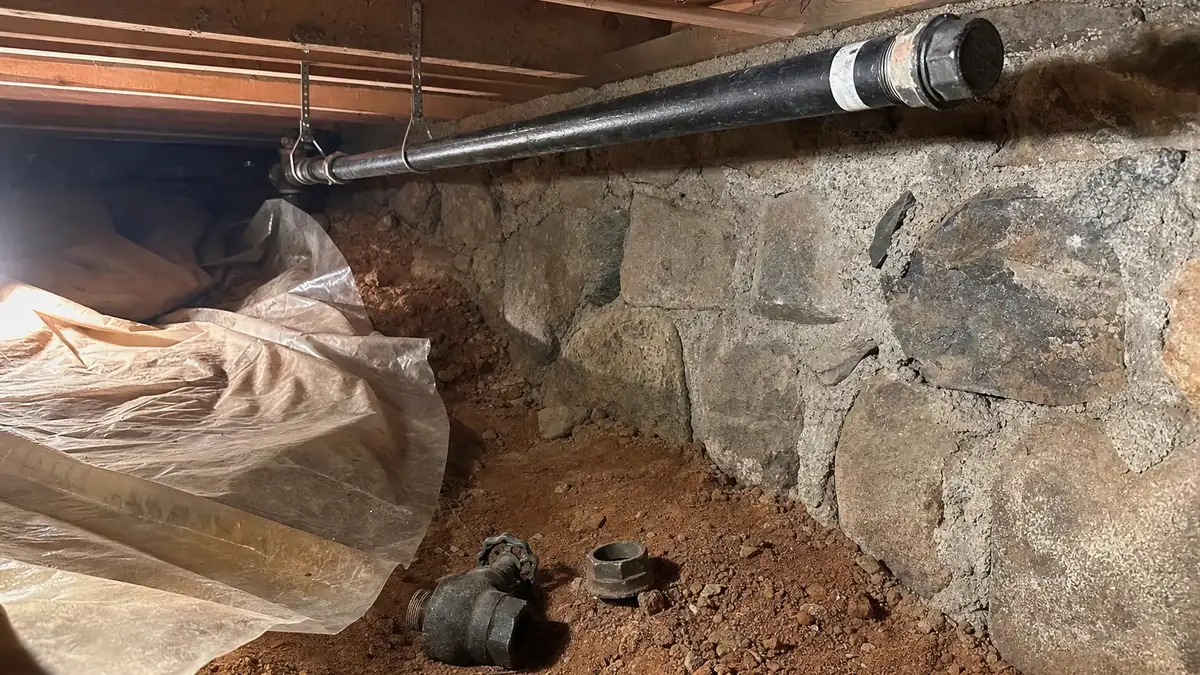
After a heat pump conversion, disused propane piping must be cut back to an accessible point, fitted with a permanent threaded cap rated for fuel gas, pressure-tested and labeled. Tape, compression fittings and plastic plugs are not acceptable terminations. A line can be kept live for a range, fireplace or standby generator if the system is re-tested afterwards.
Proper termination, and what an inspector looks for
A decommissioned gas line is not simply a pipe with the gas turned off somewhere upstream. Correct practice is:
- Isolate and confirm the branch is depressurised.
- Cut back the line to a sound, accessible point — not left running loose into a cavity.
- Fit a permanent threaded cap or plug rated for fuel gas service. A compression fitting, tape over the end, or a plastic plug is not acceptable.
- Where the branch is being retired permanently, remove any redundant shut-off valve so a future occupant cannot open a dead leg.
- Pressure-test the remaining system and document the result.
- Label the capped point with the date and the fact it is decommissioned.
Deciding what to keep live
Not every conversion is total. Consider each remaining appliance deliberately:
| Appliance | Usual recommendation |
|---|---|
| Gas range or cooktop | Frequently retained — low consumption, and cooks who want gas want gas. Keeping one appliance does mean keeping the tank and the minimum-delivery arrangement, so price that against an induction swap. |
| Gas log or vented fireplace | Often retained for ambience and as an unpowered heat source during an outage. See combustion safety for the ventilation caveats. |
| Standby generator | A strong reason to keep a live supply. Coordinate this before capping anything — see generator sizing. |
| Water heater | Usually converted alongside the furnace. Keeping propane for hot water alone is the least efficient reason to maintain an entire fuel account. |
| Outdoor grill or fire feature | Small draw. Rarely justifies a large leased heating tank on its own, but pairs sensibly with a retained small owned tank. |
Want this run against your own delivery ticket and EMC bill? It takes one call. Free, no obligation.
Call (470) 208-3151Partial decommissioning done properly
If you are keeping one or two appliances, the system is being reconfigured rather than retired, and it should be re-engineered accordingly:
- The regulator and piping were sized for the furnace's demand. With that load gone, verify the remaining configuration still delivers correct pressure to what stays.
- Retire dead legs rather than leaving them capped where practical. Long capped branches are a future diagnostic nuisance.
- Re-test the whole system after reconfiguration, not just the section you touched.
- Tell your supplier what remains connected. Your tank size and delivery schedule should be revised to match — a large tank serving a cooktop is expensive to keep full and slow to turn over.
Materials you may encounter in older mountain homes
- Black iron pipe
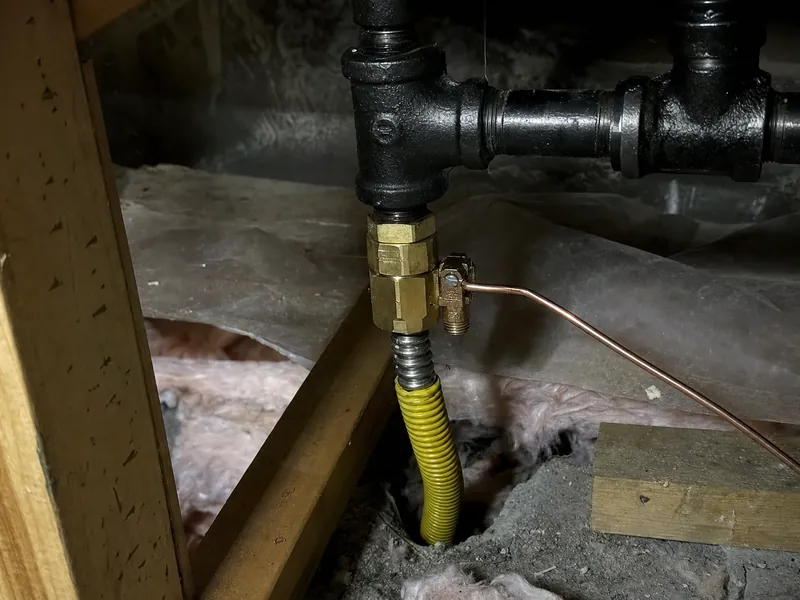
- The traditional standard. Durable, threaded joints, straightforward to cap. Check for external corrosion where it passes through crawlspaces — damp Pickens County crawls are hard on it.
- CSST (corrugated stainless steel tubing)
- Common in construction from roughly the late 1990s onward. Flexible, faster to install, and has specific bonding and lightning-protection requirements that matter considerably at elevation.
- Copper tubing
- Permitted for LP in some configurations and periods. Verify what you have before assuming.
- Undocumented DIY work
- Regularly found on rural and self-built mountain properties. If the piping history is unknown, a full system test before any reconfiguration is the right call.
Run your own numbers
Delivered-BTU math, not a marketing estimate. Change any input and the result updates.
Example only: a house burning 850 gallons at $3.20/gal through an 80% furnace, against electricity at $0.13/kWh. Backup strip heat in a hard cold snap is not modeled. Enter your own numbers above.
- Delivered heat needed
- 62.2 million BTU
- Propane cost per delivered MMBTU
- $43.71
- Heat pump cost per delivered MMBTU
- $15.29
- Electricity used
- 7,320 kWh
- This winter on propane
- $2,720
- This winter on a heat pump
- $952
Worked example at typical North Georgia prices. Change any input above and this recalculates for your house. Estimate only, not a guarantee.
Free and no obligation. You are connected to one independent, licensed, insured Georgia contractor serving your area — never a call center, never a list.
Common questions about capping the gas piping
Can I keep my gas range if I convert the heating?
Does the old gas pipe have to be removed from the walls?
Who is allowed to do this work?
Where these numbers come from
- NFPA 58, Liquefied Petroleum Gas Code — the code governing tank removal, abandonment and purging
Every contractor in this network holds a current Georgia Conditioned Air or Electrical Contractor license. You can confirm any license yourself before you sign anything — Georgia Secretary of State license lookup.
Get a conversion figure for your address
Tell us what you want to keep running on gas before we quote. It changes the piping scope and sometimes the tank decision.
Free and no obligation. You are connected to one independent, licensed, insured Georgia contractor serving your area — never a call center, never a list.
More in Propane Infrastructure & Tank Removal
Getting the tank, the lease, and the gas piping off your property legally and permanently.
Cluster hubTank removal & abandonment →